Introduction
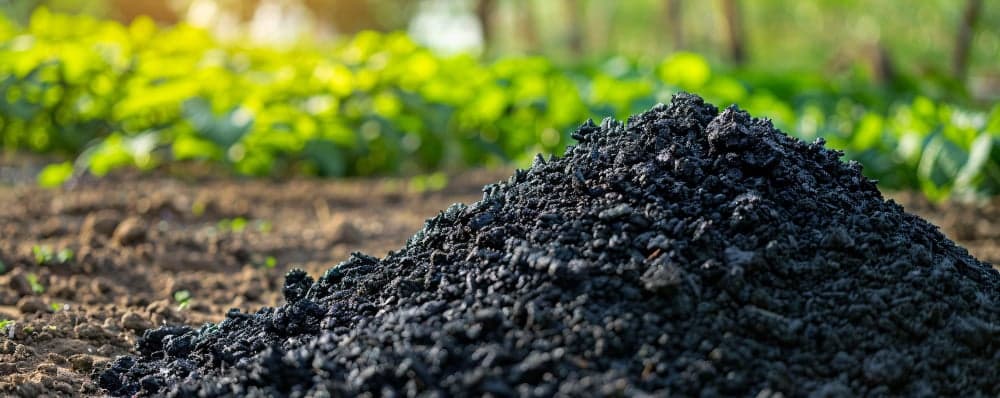
Soil health is the foundation of sustainable agriculture, yet modern farming faces critical challenges such as nutrient depletion, salinization, and climate change. Among the innovative solutions, biochar—a carbon-rich material produced from biomass through pyrolysis—has emerged as a powerful tool to restore soil vitality. Its porous structure, chemical stability, and ability to interact with soil nutrients make it a unique amendment that can improve crop productivity while mitigating environmental problems. This article explores how biochar affects soil health through its physical, chemical, and biological properties, along with its wider role in climate resilience and environmental protection.
Biochar and Soil Physical Properties
One of the most visible contributions of biochar is its ability to transform the physical structure of soils. Biochar enhances soil aggregation and porosity, which improves aeration, water infiltration, and root penetration. Studies have shown that it can reduce bulk density by 5–10%, making soils lighter and easier to manage. In sandy soils, biochar significantly increases water-holding capacity, helping crops withstand drought conditions.
Additionally, biochar stabilizes soil aggregates by 15–35%, which protects against erosion and improves soil structure over time. Its porous nature allows it to function like a sponge, storing moisture that plants can draw on during dry spells. This ability to moderate soil temperature and moisture is especially valuable in salt-affected or degraded soils, where biochar has been proven to improve infiltration and reduce salinity stress.
Biochar and Soil Chemical Properties
Beyond structure, biochar plays a crucial role in nutrient dynamics. Its surfaces are rich in functional groups that adsorb and retain nutrients such as nitrogen, phosphorus, and potassium, preventing them from leaching into groundwater. Research indicates that biochar can increase soil organic carbon by more than 60% and boost cation exchange capacity by over 20%, making nutrients more available to plants.
In saline soils, biochar reduces sodium accumulation, helping to restore chemical balance and protect crop roots. It also buffers soil pH, bringing acidic or alkaline soils closer to neutral conditions, where most crops thrive. Over the long term, biochar improves fertilizer efficiency, meaning farmers can achieve higher yields with lower chemical input. However, quality matters—poorly prepared biochar can contain salts or toxins that negatively affect soil chemistry.
Biochar and Soil Biological Health
Healthy soils are living ecosystems, and biochar fosters biological activity at multiple levels. By creating micro-habitats in its porous structure, biochar supports beneficial microbes such as nitrogen-fixing bacteria and mycorrhizal fungi. This leads to an increase in microbial biomass by 7–26% and higher enzyme activity, both of which drive nutrient cycling and organic matter decomposition.
These biological improvements translate into stronger plant growth, enhanced disease resistance, and more resilient ecosystems. For instance, biochar can promote mycorrhizal colonization, helping crops absorb phosphorus more efficiently. It also contributes to soil organic matter stabilization, which builds long-term fertility. Still, the response depends on the type of biochar and the soil environment; in some cases, biochar can temporarily immobilize nitrogen, slightly slowing early plant growth.
Conclusion
Biochar is far more than a soil additive—it is a multifunctional strategy for sustainable agriculture. By improving soil physical structure, optimizing chemical balance, and enriching biological activity, it directly enhances soil health and crop productivity. Beyond the farm, biochar offers climate and environmental benefits: it sequesters carbon for centuries, reduces greenhouse gas emissions, and helps remediate pollutants such as heavy metals and microplastics.
Nevertheless, biochar is not a one-size-fits-all solution. Its effectiveness depends on factors such as feedstock type, pyrolysis conditions, soil characteristics, and application rates. Future research and technological advances, including engineered and nano-biochar, hold promise for more precise and impactful applications.
As agriculture seeks solutions to feed a growing population while protecting natural resources, biochar stands out as a green innovation with the potential to regenerate soils and safeguard the environment for generations to come.
References
AUTHOR=Nepal Jaya , Ahmad Wiqar , Munsif Fazal , Khan Aziz , Zou Zhiyou TITLE=Advances and prospects of biochar in improving soil fertility, biochemical quality, and environmental applications JOURNAL=Frontiers in Environmental Science VOLUME=Volume 11 – 2023 YEAR=2023 URL=https://www.frontiersin.org/journals/environmental-science/articles/10.3389/fenvs.2023.1114752 DOI=10.3389/fenvs.2023.1114752 ISSN=2296-665X ABSTRACT=With the global food deficit increasing and rising climate change issues, there is a need to find green solutions to improve soil fertility and productivity while enhancing soil biochemical quality and reducing the ecological impact of agriculture. Biochar is a potentially cost-effective, carbonaceous resource with many agricultural and environmental applications. As a soil amendment, it improves soil physical and biochemical properties and increases soil fertility and productivity—particularly over the long-term—increasing soil aggregation, water retention, pH, and microbial activities, thus, improving overall soil quality, potentially helping to reduce chemical fertilizer needs over time. The extent of biochar’s impact on soil physiochemical properties varies depending on biochar source, type, size, inherent soil characteristics, cropping system, etc. Moreover, biochar has significant potential in soil and water remediation, especially through its unique adsorption and chemical properties capable to capture and immobilize pollutants such as metal(loid)s, organic pollutants, and hazardous emerging contaminants such as microplastics. Further, biochar has also emerged as a key strategic, cost-effective material to tackle global issues such as climate change mitigation, reducing the net greenhouse gas emission to minimize global warming potential. However, a knowledge gap remains as to understanding the long-term persistence of biochar on agroecosystem, optimal biochar application rate for the diversity of biochar-soil-crop-environmental conditions, interaction of biochar with inherent soil carbon stock, specific mechanisms of biochar’s effect on soil biotic properties, quantification of carbon sequestration, greenhouse gas emissions, synergy or potential antagonistic effects with other carbon sources such as compost, manure, residues, etc., its modification for environmental applications and associated environmental and human risks over long-term. Further research is needed to evaluate the long-term impacts of types and sizes of biochar on overall soil quality to recommend suitable application practices based on soil management and cropping system. Also, its environmental applications need to be fine tuned for wider and target specific applications to tackle pressing environmental issues such as soil and water pollution.
Yanfei Yuan, Qiang Liu, Hao Zheng, Min Li, Yifan Liu, Xiao Wang, Yue Peng, Xianxiang Luo, Fengmin Li, Xiaoyun Li, Baoshan Xing, Biochar as a sustainable tool for improving the health of salt-affected soils, Soil & Environmental Health, Volume 1, Issue 3, 2023, 100033, ISSN 2949-9194, https://doi.org/10.1016/j.seh.2023.100033. (https://www.sciencedirect.com/science/article/pii/S294991942300033X) Abstract: Salt-affected soil has become one of the major threats to soil health. However, the evaluation of biochar amendment effects and the underlying mechanisms on the physical, chemical, and biological indicators used for assessing the health of salt-affected soils is lacking. This review summarized biochar performance and mechanisms in improving the health of salt-affected soils. Biochar addition significantly improved soil physico-chemical properties by enhancing aggregate stability (15.0–34.9%), porosity (8.9%), and water retention capacity (7.8–18.2%), increasing cation exchange capacity (21.1%), soil organic carbon (63.1%), and nutrient availability (31.3–39.9%), as well as decreasing bulk density (6.0%) and alleviating salt stress (4.1–40.0%). Following biochar incorporation, soil biological health can also be improved, particularly enhancing microbial biomass (7.1–25.8%), facilitating enzyme activity (20.2–68.9%), and ultimately increasing plant growth. To properly assess the health of salt-affected soils, it is important to select indicators related to ecological service functions including plant production, water quality, climate change, and human health. This will improve the evaluation of soil multifunctionality and enhance current soil health assessment methods. Finally, limitations and future needs of biochar research and biochar-based technologies for soil health assessment in salt-affected soils are discussed. Based on a global meta-analysis to illustrate biochar effects on salt-affected soil health indicators, this review offers valuable insights for developing sustainable biochar-based tools for remediating salt-affected soil. Keywords: Soil degradation; Biological health; Carbon sequestration; Soil health assessment; Ecological functions; One health


