Introduction
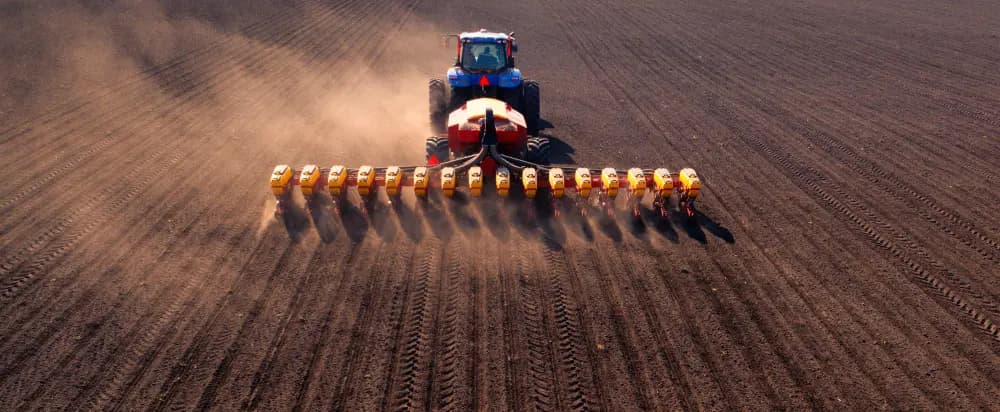
Tillage methods play a significant role in modern agriculture, greatly influencing soil structure, fertility, and microbial activity. Traditional tillage practices often disrupt soil integrity, leading to erosion, compaction, and nutrient loss. However, conservation tillage and deep tillage have emerged as effective strategies to mitigate these challenges. This article examines the impacts of tillage on soil quality, microbial dynamics, and sustainable agriculture, integrating insights from recent scientific research.
Conservation Tillage and Soil Quality
Conservation tillage, combined with minimal soil disturbance, crop residue retention, and crop diversity, has been shown to improve soil organic carbon and nitrogen content, which are vital for nutrient cycling and soil fertility. Retaining surface residues slows down the decomposition of organic matter, stabilizes soil organic carbon levels, and enhances soil particle stability. These benefits reduce soil bulk density, increase porosity, and improve the soil’s water-holding capacity. Despite its advantages, challenges such as access to specialized equipment and adherence to traditional farming methods hinder its widespread adoption.
Deep Tillage and Microbial Dynamics
Deep tillage alleviates soil compaction by breaking up hardened layers, improving root penetration and nutrient distribution in deeper soil layers. It fosters a diverse microbial ecosystem in the rhizosphere, the interactive zone between roots and soil. Studies have shown increases in beneficial microorganisms such as Bradyrhizobacteria, which enhance nitrogen fixation, and glycoside hydrolases, which catalyze carbohydrate metabolism. These changes improve nutrient availability and support crop growth and productivity. However, deep tillage can temporarily reduce fertility in surface soil layers, necessitating complementary practices such as crop rotation and residue management.
Sustainability and Environmental Considerations
Integrating deep tillage with conservation practices enhances soil health and long-term agricultural sustainability. Improved nutrient redistribution and microbial diversity in deep tillage reduce reliance on chemical fertilizers and minimize environmental pollution. Increased enzymatic activity supports soil carbon and facilitates nutrient cycling, aligning tillage methods with climate change mitigation goals. However, deep tillage can also increase the prevalence of antibiotic resistance genes in soil, highlighting the need for responsible management to balance its benefits with potential environmental risks.
Conclusion
Tillage methods, particularly conservation tillage and deep tillage, are transformative tools for improving soil health and agricultural productivity. Conservation tillage enhances soil sustainability and fertility, while deep tillage optimizes microbial diversity and nutrient distribution. Together, these approaches support sustainable agriculture by creating resilient ecosystems and optimizing resource use. To maximize the benefits, farmers should adopt integrated tillage systems tailored to local conditions, ensuring long-term soil health and environmental sustainability.
Reference
Meena, A. K., & Yadav, V. (n.d.). Effect of conservation agriculture on carbon dynamics. Agri Articles (e-Magazine for Agricultural Articles). Sardar Vallabhbhai Patel University of Agriculture and Technology; Narendra Deva University of Agriculture and Technology.
Xiang, H., Xu, J., Yang, H., Song, J., & Yu, X. (n.d.). Reduced soil quality but increased microbial diversity in cultivated land compared to other land-use types in the Longzhong Loess Plateau.
Sui, J., Wang, C., Hou, F., Shang, X., Zhao, Q., Zhang, Y., Hou, Y., Hua, X., & Chu, P. (n.d.). Effects of deep tillage on rhizosphere soil and microorganisms during wheat cultivation.


